Tuesday, September 08, 2026

Friday, August 14, 2026
Friday, July 17, 2026
FBA and ADOS movements Exposed.
Understanding ADOS: The Movement to Hijack Black Identity and Weaken Black Unity
A Dose of Reality for the #ADOS Movement | Black Agenda Report
It Is Time To Reckon With The Reactionary Rantings of ADOS/FBA | Black Agenda Report
I’m Blacker Than You: Examining the Rise of FBA and ADOS Movements
______________________________________________________
A Despository of Information: The ADOS/FBA Movements Exposed.
Monday, June 22, 2026
Saturday, May 30, 2026
People and News.
https://www.riversfh.com/obituaries/Constance-Connie-Evans?obId=47071175
TruthSeeker24's anti-N.W.O. corner: Cultural Information in Late June 2026.
https://en.wikipedia.org/wiki/Glossary_of_landforms
https://www.morrisfuneralhome.org/obituary/lucille-echols
https://jewsforjesus.org/messianic-prophecies/the-messiah-would-be-a-descendant-of-david
Sunday, April 05, 2026
What is Scientology?
Scientology is one of the most mysterious and controversial organizations in human history. It was created by L. Ron Hubbard. To be honest, Hubbard was a fraud explicitly. Not only was he was accused by the U.S. government of financial corruption. He was convicted by a French court of fraud. L. Ron Hubbard was a notorious racist who later claimed to promote equality, but he had secret writings that showed hatred against black people, Asian people, etc. He promoted apartheid in South Africa during the 1960s. Hubbard a habitual liar who made exaggerations and false claims about himself for decades. He was a science fiction writer who created a recent religion to gain profit and power. Hubbard also was a fan of the sexist, radical libertarian, and blatant occultist Aleister Crowley. For the past few years, many researchers have found out about the terminology of Scientology from the OT levels to the thetans. Celebrities like Tom Cruise defend Scientology with strong passion, but ex-members like the famous actress Leah Remini (who was on the shows of the Head of the Class in 1988, Who's the Boss? in 1989, and the King of Queens from 1998 to 2007) have used their research to refute Scientology as well. Scientology remains controversial to this day. I consider Scientology to be a sophisticated cult, because it prevents members from telling their families and loved one about their most cherished secrets, they have doctrines that are blatantly false, they incorporate infallible loyalty to its leaders, and some Scientology followers have harassed some whistleblowers. We must be clear to not violate religious liberty rights, but we must call out things that are fundamentally false in a peaceful fashion.
By Timothy
Monday, February 02, 2026
The 2026 Winter Olympics.

The 2026 Winter Olympics
Now, it is that time of the year. The Winter Olympics, over the course of decades has evolved greatly. It went from a limited competition with a minimum number of games to new games being legitimately added to it like snowboarding, etc. The Winter Games bring out the best in human beings to realize both the beauty of Nature involving snow and the importance of celebrating human athletic strength constantly. Many of the greatest athletes on Earth compete in the Winter Olympics for the purpose of trying to win events, establish a potent legacy (for family, friends, and loved ones), and show the value of human excellence. We know of the icons of the Winter Olympics whose names are: Chloe Kim, Apolo Anton Ohno, Charlotte Kalla, Eric Heiden, Shaun White, Shani Davis, Vonetta Flowers, Erin Jackson, Elana Meyers Taylor, and other human beings. Now, the 2026 Winter Olympics is taking place in Milan-Cortina, Italy. It is called the XXV Winter Olympic Games. These games will be different as they will debut ski mountaineering as a Winter Olympic event and will be the first Olympic Games under the IOC presidency of Kirsty Coventry. With all of the atmosphere of snow, hills, mountains, and the 2026 Olympics will be involving this intense competitive reality. I'm from America, so I do desire Americans and people of every nation to have victories. Many of these athletes globally desire to experience joy, happiness, and athletic victories as well. Therefore, we are witnessing history once again, and the younger generation will definitely shine in these Winter Olympics indeed fill with inspiration and a motivation for victory.
.jpg/1280px-Milan_skyline_skyscrapers_of_Porta_Nuova_business_district_(cropped).jpg)
An Overview of Milano, Italy and Cortina, Italy
Milan has a long history involving history. It is the regional capital of Lombardy in northern Italy. It is also the seat of the Metropolitan City of Milan. It is the second most populous city in Italy after Rome, with a population of 1.38 million in 2025. The city's wider metropolitan area is the largest in Italy, and the fourth largest in the European Union, with an estimated population of 6.1 million. Milan and its metropolitan area account for about 20% of the country's GDP. The Mayor of Milan is Giuseppe Sala. The legislature is run by the Milan City Council. Founded around 590 BC by a Celtic tribe, Milan was conquered by the Romans in 222 BC, who Latinized the name of the city into Mediolanum and made it the capital of the Western Roman Empire. The Visigoths laid siege to the city in 402 A.D. Attila, King of the Huns, sacked and devastated the city in 452 A.D. In 539 the Ostrogoths conquered and destroyed Milan during the Gothic War against Byzantine Emperor Justinian I. In the summer of 569 the Lombards (from whom the name of the Italian region Lombardy derives), conquered Milan, overpowering the small Byzantine garrison left for its defense. Some Roman structures remained in use in Milan under Lombard rule. Milan surrendered to Charlemagne and the Franks in 774. In the Late Medieval period, the wealthy Duchy of Milan was one of the greatest forces behind the Renaissance. As a major center of the Italian Enlightenment during the Early modern period, Milan's cultural and political struggle against Austrian domination was crucial in the reunification of the Kingdom of Italy. From the 19th century onwards, Milan led the industrial and financial development of Italy. Milan is a major international center of industry, finance, science, communications, fashion, art and tourism. Milan was classified as an "Alpha" city by the Globalization and World Cities Research Network. Milan's business district hosts Borsa Italiana, Italy's main stock exchange (part of the Euronext consortium, the world's sixth-largest by market capitalization) and the headquarters of numerous national corporations, including eight Fortune 500 Europe companies. As of 2023, Milan and its special metropolitan authority have the largest GDP and the highest per-capita GDP of any Italian province.

Milan is a global fashion capital and a major international tourist destination, being one of the most visited cities in the world, ranked second in Italy after Rome, fifth in Europe and sixteenth in the world. The city is a major cultural center, with museums and art galleries that feature some of the most important collections in the world, including major works by Leonardo da Vinci. Milan hosts numerous educational institutions, including academies and universities that account for 11% of the national total of enrolled students. Milan hosts several international events and fairs, including Milan Fashion Week and the Milan Furniture Fair, which are among the world's largest in terms of revenue, visitors and growth/ Milan has many luxury hotels and is the fifth most starred in the world by Michelin Guide. It hosted the Universal Exposition in 1906 and 2015. In the field of sports, Milan is home to two of Europe's most successful football teams, AC Milan and Inter Milan, and one of Europe's main basketball teams, Olimpia Milano. The city also co-hosted the Winter Olympic and Paralympic games in 2026.
Cortina d'Ampezzo (Italian pronunciation: [korˈtiːna damˈpɛttso]; Ladin: Anpezo or Ampëz; historical Austrian German: Hayden), sometimes abbreviated to Cortina, is a town and comune in the heart of the southern (Dolomitic) Alps in the province of Belluno, in the Veneto region of Northern Italy. Situated on the Boite river, in an alpine valley, it is an upscale summer and winter sport resort known for its skiing trails, scenery, accommodation, shops and its jet set dominated après-ski scene.


The Major Opening Ceremony of the 2026 Winter Olympics
The Milano Cortina 2026 Winter Olympics opening ceremony took place on Friday, February 6, 2026, at 8 pm. CET. There were people from more than 90 countries walking alongside their flags. They are competing in 116 medal events across 16 different sports. It was held primarily at San Siro in Milan, but also included Livigno, Predazzo, and the streets of Cortina, Italy. This was the first opening ceremony of the Olympics, which took place across four locations in the host country. As mandated by the Olympic Charter, the proceedings included an artistic program showcasing the culture of the host country and city, with harmony being a central theme, concluding with the parade of athletes and the lighting of the Olympic cauldrons. The opening ceremony was directed by Marco Balich and produced by Banijay Live's Balich Wonder Studio. It is the first time that there are two cauldrons in two different cities. The ceremony primarily took place at the San Siro in Milan, while there were events, including the Parade of Nations at sites in Cortina, Livigno, and Predazzo, highlighting the Games' host sites. The ceremony featured about 1,200 volunteer performers and more than 1,400 costumes; the performers participated in nearly 700 hours of rehearsals. There were nearly 61,000 spectators at San Siro, with ticket prices reaching $2,300 USD. It was filmed by Olympic Broadcasting Services (OBS) and broadcast by the International Olympic Committee's (IOC) global media rights holders. The theme for the ceremony was "Armonia" (Harmony). Balich explained that the word harmony derives from Ancient Greek: "It means 'bringing together' in musical terms, different elements."
The show started with a tribute to Italian artist Antonio Canova (by telling the story of Cupid and Psyche through a museum setting with dancers and music). After this, the Italian actress Matilda De Anglis conducted Italian composers Giacomo Puccini, Gioachino Rossini, and Giuseppe Verdi. Three handing blue, red, and yellow paint tube were all over the stadium, releasing colors while dancers performed. That represented creativity and artistic expression. Their respective costumes showed Italy's cultural heritage

The image above showed the Olympic cauldron in Milan.
The Games were formally opened by the current President of Italy, Sergio Mattarella. This was the first Winter Olympics and first Olympic Games opening ceremony under the IOC presidency of Kirsty Coventry.
Early Events
The 2026 Winter Olympic Games have many events going on. As early as February 4, 2026, there were the first curling matches in the round-robin stage of the mixed doubles tournament. By February 5, there was the 2nd day in the round-robin stage of the mixed doubles tournament. On that day, there are the first matches in the group stage of the women's ice hockey tournament. On that day, there are the qualification rounds in the men's big air involving snowboarding. On February 6, there was the third day in the round robin stage of mixed doubles tournament. On that date, there is the first day of competition in the team event of figure skating. February 6th saw the 2nd day of the group stage of the women's ice hockey tournament. On Day 1 (on February 7, 2026) of the official start of the 2026 Winter Olympic Games, the victors of the men's downhill of alpine skiing were Franjo von Allmen of Switzerland, Giovanni Franzoni of Italy, and Dominik Paris of Italy. The winners of the women's skiathlon (of cross-country skiing) were Frida Karlsson of Sweden, Ebba Andersson of Sweden, and Heidi Weng of Norway. The women's normal hill individual (of ski jumping) has the winners of Anna Odine Strom of Norway, Nika Prevc of Slovenia, and Nozomi Maruyama of Japan. The victor's of men's big air of snowboarding were Kira Kimura of Japan, Ryoma Kimata of Japan, and Su Yiming of China. For the women's 3000m speed skating, the winners were: Francesco Lollobrigida of Italy (who had an Olympic record), Ragne Wiklund of Norway, and Valerie Maltais of Canada.
Of Day 2, February 8, 2026, the women's downhill of alpine skiing had the winners of Breezy Johnson of America, Emma Aicher of Germany, and Sofia Goggia of Italy. The mixed relay of the biathlon was won by France of gold, Italy with silver, and Germany of Bronze. Men's skiathlon of cross country skiing was won by Johannes Hosflot Klaebo of Norway, Mathis Desloges of France, and Martin Lowstrom Nyenget of Norway. The figure skating had America winning gold (with Illia Malinin, Alysa Liu, Amber Glenn, Ellie Kam, Daniel O'Shea, Madison Chock, and Evan Bates), with Japan winning silver, and Italy winning bronze. The men's singles of luge was won by Max Langenhan of Germany, Jonas Muller of Austria, and Dominik Fischnaller of Italy. With men's parallel giant slalom of snowboarding, Benjamin Karl won gold from Austria, Kim Sang-kyum of South Korea, and Tervel Zamfirov of Bulgaria. For the women's parallel giant slalom of snowboarding, Zuzan Maderova of Czech Republic won gold, Sabine Payer won silver for Austria, and Lucia Dalmasso of Italy winning bronze. For men's 5000m speed skating, the winners were Sander Eltrem of Norway (with an Olympic Record), Metodej Jilek won silver from the Czech Republic, and Riccardo Lorello won bronze from Italy.
For Day 3 (on February 9, 2026), for men's team combined for Alpine Skiing, Franjo von Allmen and Tanguy Nef won gold from Switzerland, silver was won by Vincent Kriechmayr Manuel and Manuel Feller of Austria (along with Marco Odermatt and Loic Meillard of Switzerland), and no bronze medals. For the women's slopestyle of freestyle skiing, Mathilde Gremaud won gold from Switzerland, Eileen Gu from China, and Megan Oldham from Canada. For the men's normal hill individual from ski jumping, Philipp Raimund won gold from Gemrany, Kacper Tomasiak won silver from Poland, and Ren Nikaido of Japan won bronze and Gregor Deschwanden won bronze from Switzerland. For the women's big air from snowboarding, the victors are: Kokomo Murase of Japan, Zoi Sadowski-Synnott won silver of New Zealand, and Yu Seugn-eun won bronze from South Korea. For the women's 1000m race of speed staking, Jutta Leerdam won gold from the Netherlands with an Olympic Record, Femke Kok won silver from the Netherlands, and Miho Takagi of Japan won bronze. There are political issues in the Olympics. Freestyle skier Hunter Hess said that he wears the flag, but that doesn't mean we represents everything that's going on in America. That is part of his First Amendment right to say, but Trump and MAGA extremist Jake Paul criticized him. People have the right to love America and criticize policies in America at the same time. That is normal, but many MAGA people can't stand dissent when America was created in part by dissent. Fellow Olympian Chloe Kim defended Hess and called for unity. Chloe Kim is the daughter of immigrants. Chloe Kim told the truth that, "The U.S. had given my family and I so much opportunity, but I also think that we are allowed to voice our opinions of what's going that we need to lead with love and compassion."

More Legendary Performances
On Day 4 of the Winter Olympics, February 10, 2026, the women's team combined alpine skiing was won by Ariane Radler and Katharina Huber of Austria. Kira Weidle-Winkelmann and Emma Aicher won silver for Germany. Jacqueline Wiles and Paul Moltzan of America won bronze. The men's biathlon individual race was won by Johan-Olav Botn of Norway (Eric Perrot of France won silver and Sturla Holm Laegreid won bronze from Norway). The men's cross-country skiing was won by Joannes Hosflot Kaebo of Norway (Ben Ogden won silver from America and Oskar Opstad Vike won bronze from Norway), and the winner of the women's cross-country skiing sprint was Linn Svahn of Sweden (Jonna Sundling won silver from Sweden and Maja Dhlqvist won bronze from Sweden). For mixed curling in doubles, Sweden won gold, America won silver, and Italy won bronze. There were more events from Day 5 and beyond. America's Elizabeth Lemley won gold in the women's moguls freestyle skiing. America won gold with Jordan Stolz from the men's speed skating in the 1000m.
By Day 6, you have Italy winning the Alpine skiing women's Super G with Federica Brignone. Sweden won cross country skiing in women's freestyle with Firda Karlsson winning gold, Ebba Andersson winning silver from Sweden, and Jessie Diggins from America winning bronze. For the team relay of Luge, Germany won gold, Austria won silver, and Italy won bronze. South Korea won gold in the women's halfpipe who is Choi Ga-on, Chloe Kim of America won silver, and Mitsuki Ono of Japan won bronze. In the future days, people from the Netherlands to Canada won awards. In terms of the women's monobob bobsleigh, Elana Meyers Taylor won gold from America, Laura Notler won silver from Germany, and Kaillie Humphries won bronze from America. Mikaela Shiffrin won gold in the women's slalom, Camille Rast won silver from Switzerland, and Ann Swenn-Larsson won bronze from Sweden. On February 19, 2026, in the women's single of figure skating, Alysa Liu won gold in women's singles, Kaori Sakamoto won silver from Japan, and Ami Nakai won bronze from Japan. The women's ice hockey team won gold from America with Laila Edwards, Hilary Knight, Joy Dunne, and others. Canada won silver, and Switzerland won bronze. It has been a historic time for Laila Edwards, winning her gold medal in the 2026 Winter Olympics. On that date, more winners have existed too. For Nordic combined involved team large hill (2x7.5 km), Adreas Skoglund and Jens Luras Ofebro won gold form Norway, Ikka Herola and Ero Hirvonen won silver from Finland, and Sefan Rettengger and Johannes Lamparter won bronze from Finland. For the men's sprint in ski mountaineering, Oriol Cardona won gold from Spain, Nikita Filippov won silver from Individual Neutral Athletes, and Thibault Anselmet won bronze from France. For the women's sprint involving ski mountaineering, Marianne Fatton won gold from Switzerland, Emily Harrop won silver from France, and Ana Alonso won bronze from Spain. For the men's speed sakting 1500m, Ning Zhongyan won gold from China (with an Olympic World Record), Jordan Stolz won silver from America, and Kjeld Nuis won bronze from the Netherlands. By February 20, 2026 in Day 14, American Alex Ferreira won gold in the men's halfpipe, Henry Sildaru won silver from Estonia, and Brandan Mackay won bronze from Canada. By the next day, the mixed team aerials had America winning gold, Switzerland winning silver, and China winning bronze. For the men's mass start for speed skating, Jorrit Bergsma won gold from the Netherlands, Viktor Hald Thorup won silver from Denmark, and Andrea Giovannini won bronze from Italy. For the women's mass start, Marijke Greonewoud won gold from the Netherlands, Ivanie Blodin won silver from Canada, and Mia Kiburg won bronze form America.
On Day 15 on February 21, 2026, the women's mass start winners of the biathlon were Oceane Michelon of France winning gold, silver was earned by Julia Simon of France, and bronze went to Tereza Vobornikova of Romania. The two-woman bobsliegh race was won by gold by Laura Nolte and Deborah Levi of Germany, Lisa Buckwitz and Neele Schuten of Germany with silver, and Kaillie Humphries and Jasmine Jones of America winning bronze. The men's cross country skiing classical was won by Johannes Hosflot Klaebo of Norway winning gold, Martin Lowstrom Nyenget winning silver from Norway, and Emil Iversen winning bronze from Norway. The men's curling team had Canada winning gold, Great Britain winning silver, and Switzerland winning bronze. In men's ski cross, Italy won gold by Simone Deromedis of Italy, Federico Tomasoni winning silver from Italy, and Alex Fiva winning bronze from Switzerland. For he mixed team aerials of freestyle skiing, the American team won gold, the Switzerland team won silver, and the Chinese team won bronze. For the mixed relay of the ski mountaineering, France won gold (with Emily Harrop and Thibault Anselmet), Switzerland won silver (with Marianne Fatton and Jon Kistler), and Spain won bronze with Ana Alonso and Oriol Cardona. With speed skating of men's mass start, Jorrit Bergsma won gold from the Netherlands, Denmark's Viktor Hald Thorup won silver, and Andrea Giovannini of Italy won silver. In the women's mass start of speed skating, Marijke Groenewoud of the Netherlands won gold, Ivanie Blondin won silver from Canada, and Mia Kilburg of America won bronze.
On Day 16, February 22, 2026, the four man Bobsleigh race was won by Germany for gold, Germany for silver, and Switzerland for bronze. For the women's classical of cross country skiing, Ebba Andersson won gold from Sweden, Heidi Weng won silver from Norway, and Nadja Kalin won bronze from Switzerland. For the curling women's team race, Sweden won gold, Switzerland won silver, and Canada won bronze. For the women's halfpipe of freestyle skiing, Eileen Gu won gold from China, Li Fanghui of China won silver, and Zoe Atkin won bronze from Great Britain. For men's ice hockey, the American team won gold, Canada's team won silver, and Finland's team won bronze. As for the Paralympic Games, America won many medals like Oksana Masters of America winning gold in the women's spring sitting race, Kendall Gretsch winning silver, and Anja Wicker winning bronze from Germany. Jake Adicoff of America won the men's sprint classical for the visually impaired, Yu Shuang won silver for China, and Zebastian won bronze from Sweden.

The Closing Ceremony
The 2026 Winter Olympics closing ceremony took place on February 22, 2026. It started at 20:30 CET (19:30 UTC) and concluded at 23:00. It was held at the Verona Arena in Verona, Italy. As mandated by the Olympic Charter, the proceedings combine the protocol-related and cultural segments. It is the first Olympic Games closing ceremony under the IOC presidency of Kirsty Coventry. The city of Verona was chosen to host the ceremony, even though no events were scheduled to take place there. The intention was for the ceremony to be held in a setting reminiscent of the ancient Olympic Games. The ancient Roman amphitheater regularly hosts a famous open-air opera festival as well as other cultural events. There will be the future opening ceremony of the 2026 Winter Paralympics on March 6, 2026. The Teatro Filarmonico, an opera theatre in Verona, served as a secondary venue. The closing ceremony was filmed by Olympic Broadcasting Services (OBS) and broadcast by the International Olympic Committee's (IOC) Global Media rights holders. The creative team for the ceremony was led by Francesco Paolo Conticello, president and CEO of G2 Eventi – Casta Diva Group. The team includes Angelo Bonello (artistic and show director) and Francesca Formisano (music composer). While other sources stated that the creative team was guided by Alfredo Accatino [it], with the team consisting of Adriano Martella (creative director), Stefania Opipari (show director), Stefano Ciammitti (costume designer), Vittorio Cosma (music director), Michele Braga [it] (music director) and Claudio Santucci (set designer). The Olympians staying in the Milan Olympic Village travelled by train from Milan to Verona.
The starting ceremony started with a film tribute to the Italian opera: a lumière illuminated multiple chandeliers on a constructed stage in the middle of the arena, with a camera following him behind the stage into underground tunnels beneath the arena. The segment was named "a night at the opera", and featured tributes to various Italian operas, including La traviata, Madama Butterfly, The Marriage of Figaro, Aida, and Rigoletto. This segment featured cameos from famous Italians, including Achille Lauro and Deborah Compagnoni. A brief tribute to Juliet on her balcony was also seen. Afterwards, a large chandelier appeared above the stage while music from La traviata was playing. Meanwhile, athletes paraded through Piazza Bra in Verona while making their way into the arena.
After the seating of the dignitaries, Paolo Fresu and the choir of the Fondazione Arena di Verona performed "Il Canto degli Italiani" during the raising of the flag of Italy; the flag itself was carried by people from the host sites of the games and the Carabinieri. Italian athletes who won medals at the Games stood on stage during the flag raising. The choir sang from the Teatro Filarmonico, which served as a secondary venue for the ceremony. At the secondary venue, an audience including Benedetta Porcaroli was shown. Another tribute to Italian operas followed, with performers wearing extravagant costumes made using recycled materials. A short video segment titled "Faces of Italy" saw portraits of various Italians, captured by photographer Marco Delogu. Afterwards, Italian athletes Silvio Fauner, Maurilio De Zolt, Marco Albarello, and Giorgio Vanzetta (members of the winning Cross-country skiing at the 1994 Winter Olympics – Men's 4 × 10 kilometer relay team) appeared with the Olympic flame in an ampoule; this led to the illumination of the Olympic rings inside the arena. After the flags of the nations competing at the Games arrived in the arena, so did the athletes. During the athletes' parade, Margherita Vicario, Davide Shorty, and Calibro 35 performed on stage. This was followed by an acrobatic performance representing athletes and a victory ceremony for the medalists from Cross-country skiing – Men's 50 kilometer classical and Cross-country skiing – Women's 50 kilometer classical.
Gabry Ponte and Eiffel 65 performed Blue (Da Ba Dee) during a tribute to the Games' volunteers, which was followed by a remembrance segment performed by Jun Ichikawa. With various references to water and sunlight, La Scala Theatre Ballet's Roberto Bolle performed an aerial tribute to Earth. Italian singer Joan Thiele also performed during the segment. Afterwards, the choir and orchestra of the Fondazione Arena di Verona performed the Olympic Hymn during the lowering of the Olympic flag. Shortly before, "Hymn to Liberty" (the national anthem of Greece) was performed during its flag raising. The mayors of Milan and Cortina d'Ampezzo handed over the flag to the presidents of Provence-Alpes-Côte d'Azur and Auvergne-Rhône-Alpes, the host regions of the 2030 Winter Olympics. This was followed by the raising of the flag of France and a performance of "La Marseillaise" by Marine Chagnon. During the performance, French athletes at the Games appeared; this was followed by a video from the French Alps, with references to light and "a new dawn." Milano Cortina 2026 organizing president Giovanni Malagò and International Olympic Committee president Kirsty Coventry delivered official remarks, with Coventry declaring the closing of the Games, praising them as "magical games", and inviting the youth of the world and the audience to assemble in the French Alps in 4 years. The flame was extinguished at the arena, Milan, and Cortina d'Ampezzo, while pianist Gloria Campaner performed Experience by Ludovico Einaudi. This was followed by the musical performances of Diplo, Major Lazer, Meduza, MØ, Nyla, DJ Snake, Achille Lauro, and Alfa. A light show also occurred in place of fireworks. To end the ceremony, the characters from the opera segment rested under the arena.

Epilogue
The Winter Olympics have dealt with adventure, the power of Nature, athleticism, records being broken, and a profound love of sports competition. The teams with the most medals are from Norway and America. It is also important to mention that nations globally (including nations from diverse places of the world) have outlined outstanding performances in their own right. We have witnessed exciting results, as both the Men's and Women's American Ice Hockey teams won gold in a historic fashion. Like many games, politics is involved. This is not new, as we know about the story of 2 black men (who are gold medalist Tommie Smith and bronze medalist John Carlos. Both people were members of the Olympic Project for Human Rights) showing the fist up in the air during the 1968 Mexico City Olympics to stand up for black freedom and human rights, too. We know of Jesse Owens winning four gold medals in the 1936 Olympics in Berlin, Germany (when that evil, wicked, racist, and anti-Semitic fascist Hitler was in power in Germany). Jesse Owens' performances refuted the lie of white supremacy. Many athletes in 2026 opposed the excessive occupation of Minneapolis and other places in America, because human rights is a precise principle that must be honored by all. Also, diversity is a positive attribute of true American society. America is never some homogeneous society consisting of just one culture or one race.
America is like a quilt that brings together humanity among different cultures, ethnicities, races, sexes, nationalities, creeds, and backgrounds into one national framework (filled with diversity, equality, and cultural greatness). Our cultural greatness is by We the People being filled with multifaceted origins (as all Americans are either descendants of slaves or descendants of immigrants plus migrants) and a dedication to one God-given principle of liberty for all in the fulfillment of the Golden Rule. Lindsay Vann was one brave person to compete in the Games despite being injured twice. Other competitors won gold, silver, and bronze. Yet, all athletes in Italy gained a priceless experience in seeing the wonder of Milan, the grand nature of human expression, and the commitment to solve global problems honorably. The 2026 Winter Olympics Games taking place in February make us aware to celebrate the black athletes who competed too in Black History Month. Laila Edwards is the first black U.S. women's hockey player who won gold in the women's ice hockey finals. Elana Meyers Taylor won gold, being the most decorated black Winter Olympian in bobsled. Other competitors who participated who are black people and people of color are Kayshsa Love, Aazaria Hill, Jasmine Jones, Mystique Ro, Darryl Payne Jr. (who is the first African American man to compete in the Olympic skeleton), Bryan Sosoo, Sarah Nurse (who won silver from Canade), Sophie Jaques (who won silver form Canada), Erin Jackson, Samuel Ikpefan, Nathan Tchibozo, and Issa Laborde. Additionally, showing compassion is always a vital feature of life. The Paralympic Winter Olympic Games in 2026 have inspired the global community with its magnanimous performances.
By Timothy
* I am going to write more information about the Olympics as time goes forward. So, in the near future, tons of information will be shown here.
Sunday, February 01, 2026
America to Me (America at 250 Years Old).

America: 250 Years Later.
I was born and raised in the United States of America for almost 45 years. This year is the 250th year anniversary of the existence of the United States of America. I have the total right to write and analyze my nation of America in a fair, accurate fashion without sugarcoating reality. Now, America is the most powerful nation in human history, the most diverse nation in human history (people of every race, color, nationality, sex, and background live in America for centuries), and we are among the most resilient nations in human history. Many Americans have done the right thing to establish legitimate inventions, to stand up for human rights (in the civil rights, women's rights, labor rights, environmental rights movements, etc.) and shown compassion in the world. Also, many Americans have done evil like enacting slavery, oppression a against BIPOC people in general (BIPOC stands for Black, Indigenous, and people of color), lynching, advancing xenophobia plus sexism, and other atrocities. How do we reconcile the contradiction of America having this mixed legacy of goodness and wickedness? You just show the truth as it is, and you should inspire America to be better than the past and present. America is about Jackie Robinson and Babe Ruth playing baseball. America is about skiing and hiking among hills and mountains. America deals with courage involving the Freedom Riders and anti-Vietnam War activists expressing themselves. The food we eat, the slang that we exhibit, and the honor shown to soldiers who paid the ultimate sacrifice relate to America too. It is important to note that African Americans culturally have a heavy influence in ultimate American culture from music, fashion, inventions, and social justice matters. We have a long way to go to witness America living up to the lofty, sacrosanct ideals of democracy, liberty, equality, and justice. Yet, we have every God given right to fight for those principles constructively in witnessing a future America filled with glory and honor.
The History of America
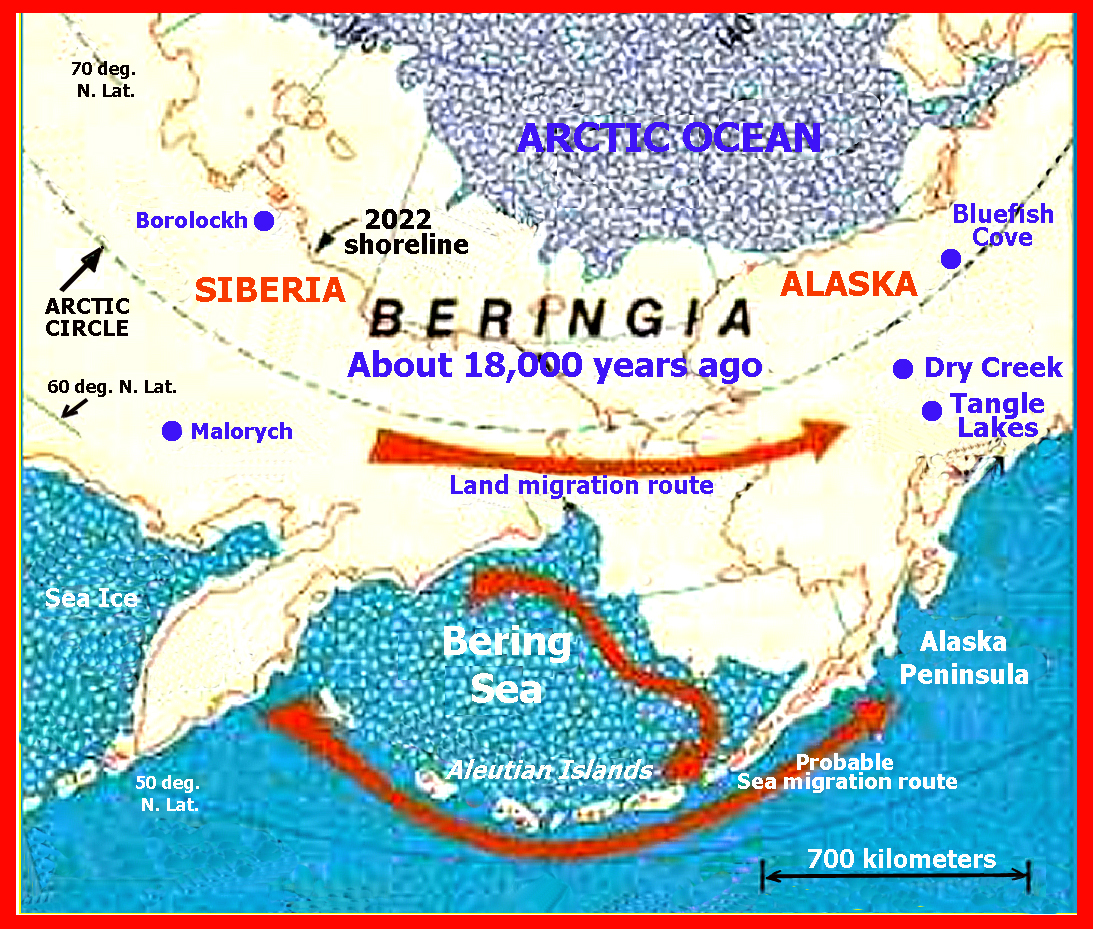
It is important to know about America's history after 250 years of its existence. I can't list all of the details of America's story as that would take an infinite amount of pages, but I can give a concise explanation of American history to show human beings the truth. Long ago, America existed, and the first humans who lived in America were the Native Americans. They are a people, related genetically to the Siberians, who traveled from Siberia to North America by the end of the last major Ice Age at ca. 15,000 - 30,000 years ago via the Bering Land Bridge (Beringia). Now, the Native American tribes had diverse cultures from the Powhatan, Nottoway, Cheyenne, Navaho, Shawnee, etc. They spread across two continents with advanced civilizations. There was the Olmec culture with advanced mathematics, the Maya with a calendar system, The Aztec, the Mound Culture of North America, the Pueblo, etc. These areas of America flourished with tons of people. Hawaii had Polynesian and Pacific Islander human beings too. As time went on, the Native Americans grew infrastructure on various lands, had differences, and worshipped in a multiple number of creeds. Over the millennia, persons of color always lived in the Americas. Then, the Europeans came into North America by ca. 1000 A.D. via the Vikings who came to LAnse aux Meadows (in Newfoundland, Canada). The Vikings had a short-lived encounter with Native Americans. Centuries later; more European explorers (including pirates) and imperialists came to America from the 1400s to the 1500s. Many of the Europeans had diverse motivations. Some wanted religious freedom. Others want thievery, genocide, and economic exploitation of innocent human life. These European imperialists and slave owners were the oppressors of my black ancestors. Many of the European imperialists savagery enslaved Africans and Native Americans.

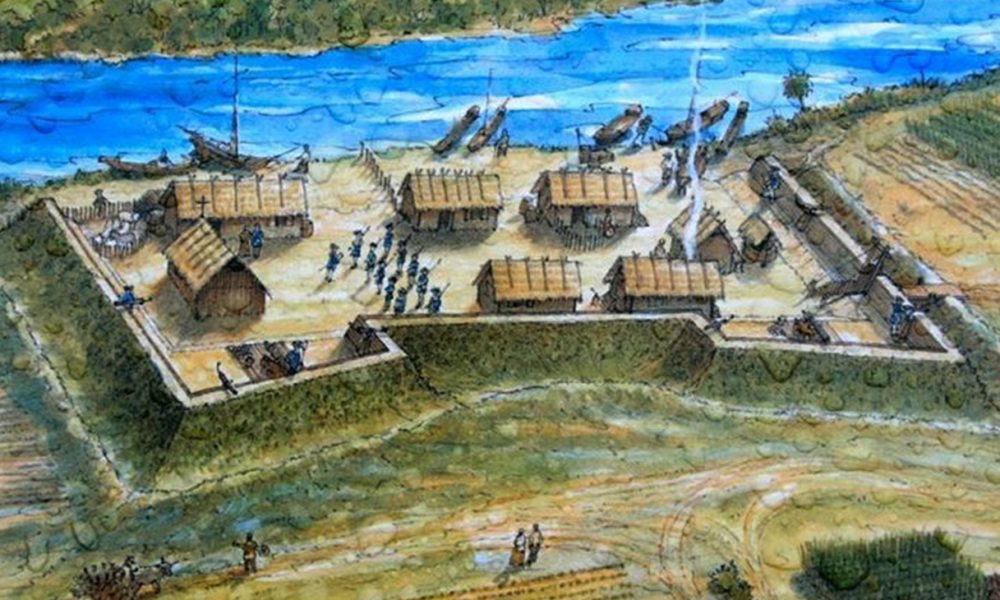
The European imperialists stole tons of lands in the Americas, and they founded the Maafa for economic exploitation to benefit a few of the oligarchy. They did it for racist reasons as well. Africans and Native Americans heroically fought back against the imperialists. It is true that traitorous Native Americans and traitorous Africans were involved in the genocide of innocent human beings who were Native Americans and Africans. It is important to note that European racists planned and organized the Maafa. This crisis of democracy now in 2026 has been caused policies to from the one percent (in the financial monarchical oligarchy). America was filled with colonies, Native American tribes, and Africans being free and enslaved by 1700. Great Britain became the leading Empire after the French and Indian War. After that, the colonists were angered at the British control of lands and excessive laws directed to them. These laws were the Stamp Act, the Quartering Act, etc. Some American colonists wanted to establish independence, some wanted to stay within the British Empire (or they were Loyalists), and the rest were neutral. The American Revolutionary War started when the British and colonial forces fought in Massachusetts. The war was a near victory for the Redcoats, but America won by guerilla warfare, resiliency, and help from other nations (like Spain, France, the Dutch, etc.). The Declaration of Independence was signed on July 4, 1776. That date represented the start of the United States of America. America has the contradiction of the words of the Declaration of Independence mentioning that "all men are created equal," but black people were slaves plus other groups of people were denied basic human rights. Back in the 1700s, Native Americans, women, Latinos, and other minorities were being oppressed. The Treaty of Paris ended the American Revolutionary War in 1783.
George Washington was elected the First President of the United States. He was a general, and he wanted a strong federal government to handle national affairs. There were the Federalists and Anti-Federalists. The Federalists were right to desire a strong federal government, and the Anti-Federalists were right to want the Bill of Rights to act as a check to the powers of the federal government too. From 1789 to 1861, America experienced the antebellum period. This time saw the expansion of American lands (in many cases these lands were stolen and conquered by many Americans against the indigenous people). Many colonists started to migrate to the Midwest and the West. Slave revolts increased by the1700s and 1800s by Nat Turner, Gabriel Posser, etc. The Underground Railroad helped to free slaves from tyranny and bondage. Harriet Tubman (who was from the Eastern Shore of Maryland where many of my distant cousins live at) was part of the movement to free many slaves. In America by the 1800s, cities and towns grew with schools, churches, synagogues, mosques, factories, universities, sporting places, and other institutions. Presidents rose into power. Some were more progressive and others were more conservative. America became involved in new, controversial wars like the War of 1812 (against the British Empire) and the Mexican American War (that caused Texas to be part of the Union. Many leaders in Texas wanted slavery while Mexico banned slavery back then). Women promoted equality in the suffrage movement by the 19th century. Slavery was a major issue in 19th century America. Some states freed slaves, and other states refused to do so. The political, economic, and social tensions among the North and the South along with slavery caused the American Civil War. T
he U.S. Civil War started by the South illegally bombing Fort Sumter in 1861. Southern states seceded including my home state of Virginia. The Union won the battles of the war by having more people, more resources, and more factories across the nation. Heroes of every color in the Union Army helped to defeat the Confederate enemy. Black people played a key role in the Confederate defeat especially. President Abraham Lincoln, Union generals, soldiers, allies, and other people led the Union to have the victory. Harriet Tubman led a battle in South Carolina too. The Confederacy (whose own documents admitted that they seceded to promote slavery and promote the myth of white supremacy) lost the U.S. Civil War in 1865. The American Civil War was over. Reconstruction existed with black Americans having political office locally, statewide, and federally for the first time in American history. We saw the rise of the Klan and people fighting them. President Ulyssess S. Grant (who had imperfections) was right to support civil rights legislation. He was right to oppose the terrorism of the Klan. The Compromise of 1873 ended Reconstruction as we know it. Reconstruction was an experiment that increased self-determination and political power among the African American community. Reconstruction ended by both reactionary racist oligarchs of the South and the capitalist business class of the North coming to together to support the evil status quo of Jim Crow apartheid by 1873.
Jim Crow apartheid was formed in the 1800s and it exploded into the next level by the start of the 20th century. Jim Crow apartheid was plain terrorism filled with the lynching of black people, the rape of black people, and unjust discrimination against black Americans. It was a brutal system and groups formed like the NAACP (which grew from the Niagara Movement. Some of its origin founders were Ida B. Wells and W.E.B. DuBois), the National Association of Colored Women, Congress of Racial Equality (CORE), the Southern Christian Leadership Conference (SNCC), the Student Non-Violent Coordinating Committee), etc. America saw the Progressive Movement of the early 20th century (not progressives of the 21st century) that sought housing reform, regulation of food including meat products, banning child labor, and making corporations accountable for their actions. Theodore Roosevelt helped to popularize the Progressive movement causes, and he was a liberal Republican on many issues (except on foreign policy issues). Back then, Republicans were heavily progressive ideologically, and Democrats were heavily conservative until the 1940s and the 1960s. Women fought for suffrage or voting rights being successful with the adoption of the 1920 19th Amendment given women the right to vote. WWI existed after competing European empires fought in Europe. At first, America was heavily isolationist, and then the Luistiana was attacked causing America to intervene in the war. The Americans were in the Allied Powers fighting the Central Powers (made up of Germany, Austria-Hungary, etc.). This war of WWI saw tanks, planes, and other weapons like nerve gas used being a modern type of war. WWI was international, and the Allied Forces had a victory with heroism displayed by soldiers and nurses of all colors, including black people. Woodrow Wilson was President during WWI and promoted a form of internationalism, but Wilson was a stone cold racist who opposed persons of color to have independence from colonial/imperialistic domination. The Treaty of Versailles ended WWI. Pan-Africanism grew after WWI.
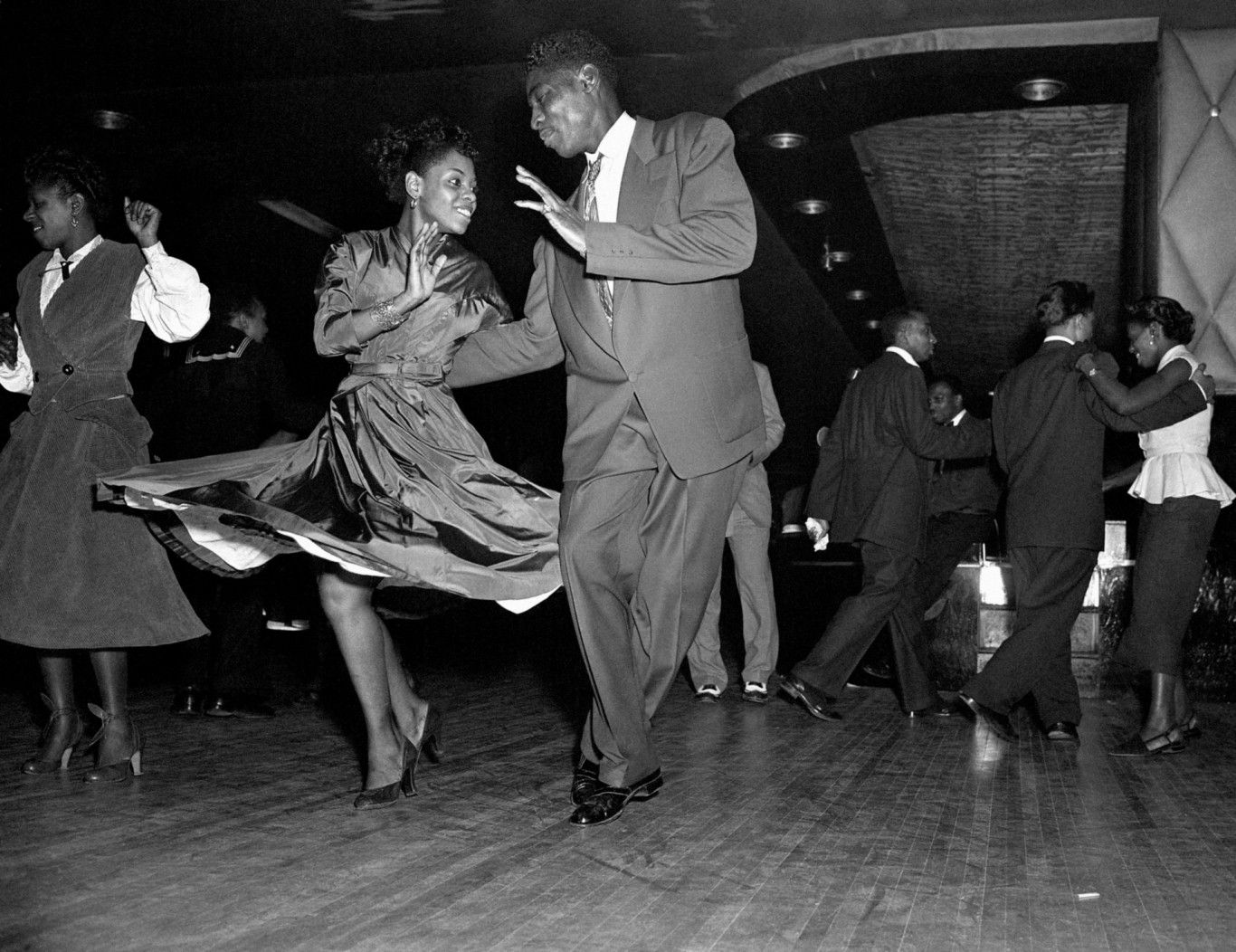
We saw the Roaring Twenties with cultural development, jazz, excess spending, new clothing, and sports development. It was the time of massive wealth expansion and the financial systems had lax regulations. When the economy suffered a massive contraction of wealth, the Great Recession existed. The Great Recession caused long lines for people to get food, the ending of companies, and a desperation for solutions. President Herbert Hoover wanted to create conservative solutions to complicated economic porblems, but most Americans wanted a bolder solution. Franklin Delano Roosevelt became President for four terms in part because of his bold economically progressive policies. President FDR passed great progressive legislation from Social Security to the regulation of finacnial instutitons. He worked in the Allied Powers to help defeat the wicked Axis Powers (with Hitler, Mussolini, Tojo, and their allies). World War II started in 1939 when Nazi Germany invaded Poland. FDR went into the conflict by aiding the Allies with the Lend Lease program, and overtly after the 1941 cowardly attack on Pearl Harbor. FDR was not perfect as he refused to allow more Jewish people to come to America as refugees, he had a mixed civil rights record, and he supported the racist Japanese internment camp policies that harmed the lives of millions of Japanese human beings. World War II ended by 1945 after the fall of Hitler, Mussolini, and Tojo's empires. The bombing of Nagasaki and Hiroshima by atomic weapons, with support of PResident Truman, to be was unjust and a crime against humanity in my opinion. The Allies victory was righteous and sacrosanct.
After World War II, Cold War Presidents gained power. The United States of America experienced the lowest economic inequality in possibly human history from 1945 to 1975. We saw the growth of the middle class, rights given to people, and the poverty rate cut in half. Yet, everything wasn't peaches and cream with lynchings, sexism, xenophobia, and harm done to many minorities. That era of the Cold War witness many social movements growing to expand human rights. The people who opposed this expansion included people like George Wallace (until he apologized late in his life), Jim Clark, Harry Byrd, James Eastland Theodore Bilbo, etc. The American Civil Rights Movement was strong filled with people like Ella Baker, Dr. King, John Lewis. Mary White Ovington, Medgar Evers, Harry T. and Hariette Moore, Joyce Landner, Ruby Doris Smith-Robinson, and other people who protested, organized institutions, been in grassroots programs for change, and some of them advocated nonviolence plus self-defense. Without thier sacrifice, we wouldn't be here today buying what we want, living in where we want, and writing what we want on many platforms. There were the Women's Rights movement reaching its Second Wave from the early 1960s to the early 1980s. There were the Poor People's Campaign, the Chicano Movement, the Native American Rights Movement, the elderly rights movement, the Disabled Rights Movement, the LGBTQIA+ movement, the environmental rights movement, and other social movements.


From Truman to Nixon, the country changed massively. We saw the Vietnam War being a disaster in America and in Vietnam. President Lyndon Baines Johnson was desperate for a U.S. victory, but the war was a stalemate until America withdrew from Vietnam (causing a North Vietnamese victory by 1975 when Gerald Ford was President). The nation witnessed stagflation and economic malaise by the 1970s. Ronald Reagan was the leader of the conservative movement by the late 1970s and causing the Conservative Movement to reach into new power in the 1980s. Reagan was very controversial and won 2 terms as America back in the day was much more conservative than it is now in 2026. Activists fought back against Reaganism too. During the two terms of Reagan, there was an expansion of Wall Street power, growth of the deficits, and Reagan was out of office by 1989. Geroge W. Bush was a center right President who lost in part by the recession, and Bill Clinton having political charisma to promise change to America. Bill Clinton had two terms being a center-left President witnessing the expansion of the Internet, technological advancements, the end of the Cold War, the dot com boom, and a reduction of the crime rate. There has been massive economic expansion, but many poor people suffered with the cuts to welfare via the Welfare Reform Act.
Then, George W. Bush was President by 2001. George W. Bush had two terms being a Reagan conservative. He was controversial and protested by his Iraq War advocacy, his support of the Patriot Act, and his promotion of many reactionary policies. George W. Bush did a good thing by investing in anti-AIDS research in Africa having bipartisan support. With the massive recession of 2008, George W. Bush was in a low position. He passed a banker bailout law, but the bailout didn't extend that much to homeowners or the American people collectively. President Barack Obama promoted hope and change for America. He was elected in 2008 causing Oprah Winfrey and Jesse Jackson to cry tears of joy. President Barack Obama had a legacy of both great accomplishments (like the Dodd-Frank Act, better relations with Cuba, the good parts of the Affordable Care Act, and the investments in HBCUs). Obama's biggest errors include his foreign policy being just as aggressive as the neo-cons with the Bush Jr. years. Donald Trump used the bigotry, racism, and xenophobia in some quarters of America to win the 2016 election. Trump started his campaign in 2015. Trump's first term saw Muslim bans, the racist attacks at Charlottesville, Virginia in 2017, and the COVID-19 pandemic (that murdered over one million Americans and millions more worldwide). Trump's first term ended in 2021 when President Biden was inaugurated as President after the January 6th terrorist attack (which was done by MAGA terrorists).

President Biden passed some of the most progressive legislation in American history benefiting black people, poor people, brown people, and people of every background. Later, President Biden had one term, and Trump had his 2nd term. Since 2025, people have experienced Trump doing even more egregious actions. In 2026, democracy is under threat hanging in the balance with an illegal Iran War, ICE being used domestically in airports and in our streets, detention centers, an expansion of voter suppression policies (with many states lowering voter times, limiting mail in voting, and other anti-voting policies), harm done to whitewash black museums, and an expansion of the executive branch (in violation of the separation of powers). Donald Trump's authoritarianism is nefarious, and people have every God-given right to peacefully dissent with Trumpism in 2026.
The Culture of America
The culture of the United States of America has been around for centuries, being the most diverse culture in all of human history. That is just the plain truth. First, it is important to describe cuisine as a very vital part of American culture. How we eat food and the diversity of food ingredients has changed the world in a myriad of positive ways. American cuisine has always been a mixture of foods found in American indigenously and foods from other continents. For example, foods like corn, beans, wild rice, sunflower, seeds, pecans cranberries, blueberries, corn, maple syrup, turkey, and pumpkins are found in North America. They are all found in our backyard. There are other foods that existed originally overseas, like apples, peaches, wheat, rice, onions, carrots, tea park, coffee, and tea. Tons of us love apple pie, sweet potato pie, and lemon pie. We enjoy oatmeal and other items like okra, jumbo, pizza, spaghetti, and other types of foods from different cultures globally. There have been television shows and movies that focus on food culture too, including those found on the Food Network. American culture readily embraces self-reliance, individualism, and independence. That means that many of us believe in using self-determination to achieve profound greatness. Also, this doesn't mean we should embrace or advance a form of selfish individualism, greed, and wicked behavior. There is also a role for community and collective power in enhancing society's general welfare. No one is an island.
Religion plays a large role in American society. About 81-83% of all Americans believe in God or a universal Spirit. Religion or spirituality shaped American society for centuries via social activists, the many Great Awakening, and more grassroots churches of the 21st century. Believers in God have always invoked God to stand up against slavery, to promote racial justice, to fight for voting rights, to agree with economic justice, to stand with immigrants, and support other social improvements in society. The largest religious group of people in America is Christians. The South is sometimes informally called the "Bible Belt" due to socially conservative evangelical Protestantism, which is a significant part of the region's culture. Christian church attendance across all denominations is generally higher there than the national average. This region is usually contrasted with the mainline Protestantism and Catholicism of the Northeast, the religiously diverse Midwest and Great Lakes, the Mormon Corridor in Utah and southern Idaho, and the relatively secular West. The percentage of non-religious people is the highest in the northeastern and New England state of Vermont at 34%, compared to 6% in the Bible Belt state of Alabama. There are agnostics, atheists, and other followers of various creeds that exist in America too.
Language has a great deal to do with American culture. There are more than 300 languages spoken nationwide on a regular basis, and up to 800 languages spoken in New York City (besides English). English is spoken by most Americans, but other languages are spoken including languages spoken by indigenous peoples (with 150 living languages) Many xenophobes and bigots forget that the first people who came to America never spoke a syllable of English originally. There is no official language in American society. According to the 2000 census, there were nearly 30 million native speakers of Spanish in the United States. Spanish has official status in the Commonwealth of Puerto Rico, where it is the primary language spoken, and the state of New Mexico; numerous Spanish enclaves exist around the country as well. By 2017, 78.2 percent of Americans spoke English only, 13.4 Americans speak Spanish, 1.1 percent of Americans speak Chinese, and 7.3 percent of Americans speak other languages. There are regional differences in American culture. There are the Appalachia region stretches in the mountains from Georgia to West Virginia and parts of Pennsylvania. We know of the major regions of the South, the Deep South, the Southwest, the Midwest, the Mid-Atlantic, the Northeast, New England, the Mountain West, the Pacific West, Hawaii, Puerto Rico, American Samoa, other Caribbean places, and other regions with diverse cultures and traditions.

Sports represent a massive part of American culture. When the Super Bowl, MLB World Series, and the NBA Finals comes on televisions, millions of Americans and people worldwide watch these sporting events (they witness them in arenas too). By the 1800s, colleges were encouraged to focus on intramural sports, particularly track and field, and, in the late 1800s, American football. Physical education was incorporated into primary school curriculums in the 20th century. A typical baseball diamond as seen from the stadium in baseball stadiums constantly. Baseball is the oldest of the major American team sports. Professional baseball dates from 1869 and had no close rivals in popularity until the 1960s. Though baseball is no longer the most popular sport, it is still referred to as "the national pastime. "Ice hockey is the fourth-leading professional team sport. Always a mainstay of Great Lakes and New England-area culture, the sport gained tenuous footholds in regions like the American South since the early 1990s, as the National Hockey League pursued a policy of expansion. Soccer is very popular as a participation sport, particularly among youth, and the US national teams are competitive internationally. A twenty-six-team (with four more confirmed to be added within the next few years) professional league, Major League Soccer, plays from March to October, but its television audience and overall popularity lag behind other American professional sports. We, who are Americans, have been inspired by Hank Aaron hitting homeruns decades ago, Sam Darnold throwing passing in the NFL for the Seattle Seahawks, Chloe Kim being involved in the Winter Olympics, Trinity Rodman playing soccer for the Washington Spirit of the NWSL, Jalen Hurts being a great NFL quarterback, Naphessa Collier playing excellent basketball, LeBron James showing great longevity in the NBA, the late Muhammad Ali being a champion of social causes, and Melissa Jefferson-Wooden being a track and field legend show us the power of American sports excellence. Relative to other parts of the world, the United States is unusually competitive in women's sports, a fact usually attributed to the Title IX anti-discrimination law, which requires most American colleges to give equal funding to men's and women's sports.
One of the major parts of American culture has been music. It has spread all across America and in the entire world. Much of the music of America was formed in America, and some came from other nations. Hip Hop, country, rock, gospel, jazz, pop, techno, soul, blues, and other music can be heard here plus globally. Music in America is extremely diverse. America has the largest music market with a total retail value of $4.9 billion in 2014. Without us African Americans, there is no modern American music today as we know it. The rhythmic and lyrical styles of black American music have been fundamental to American culture from the vocals of Aretha Franklin, the self reflection of Otis Redding, the creativity of Amerie, the emotional power of Whitney Houston, the elegance of Brandy, and to the songwriting genius of Stevie Wonder. Back in the day, many black people played banjos which came from the Motherland of Africa. The musical genres of jazz and blues represent the power of American music because the jazz and blues are ancestors of rock and roll and rhythm and blues (which was created in the 1940s). Country music developed in the 1920s. Jazz innovators like Louis Armstrong and Duke Ellington were icons of music in general. We know that pioneers of rock and roll were Chuck Berry, Little Richard, Bo Diddley, Elvis Presley, and other people in the 1950s. We know about how rock revolved into Metallica, the Eagles, Aerosmith, REM, etc. By the 1960s, Bob Dylan was a folk singer with songwriting skills. Pop music grown from Bing Crosby, Frank Sinatra, etc. to Michael Jackson, Prince, Madonna, and Whitney Houston. R&B music has been some of the greatest genres of music to describe the complex nature of love and relationships filled with Toni Braxton, Anita Baker, Brandy, Monica, SWV, Boyz II Men, H.E.R., Ella Mai, Co Co Jones, etc. The sounds from Motown, Stax Records, etc. has inspired the world showing American music at its finest. Hip Hop music has been some of the resilient genres in human history with musicians like Nas, Common, Jay Z, Megan Thee Stallion, Eminem, Lauryn Hill, Tupac, the Notorious B.I.G., and other artists like Arrested Development. We have pop superstars in the 2020s like Taylor Swift, Miley Cyrus, Ariana Grande, etc. The annual Coachella music festival in California is one of the largest, most famous, and most profitable music festival in the United States and the world.
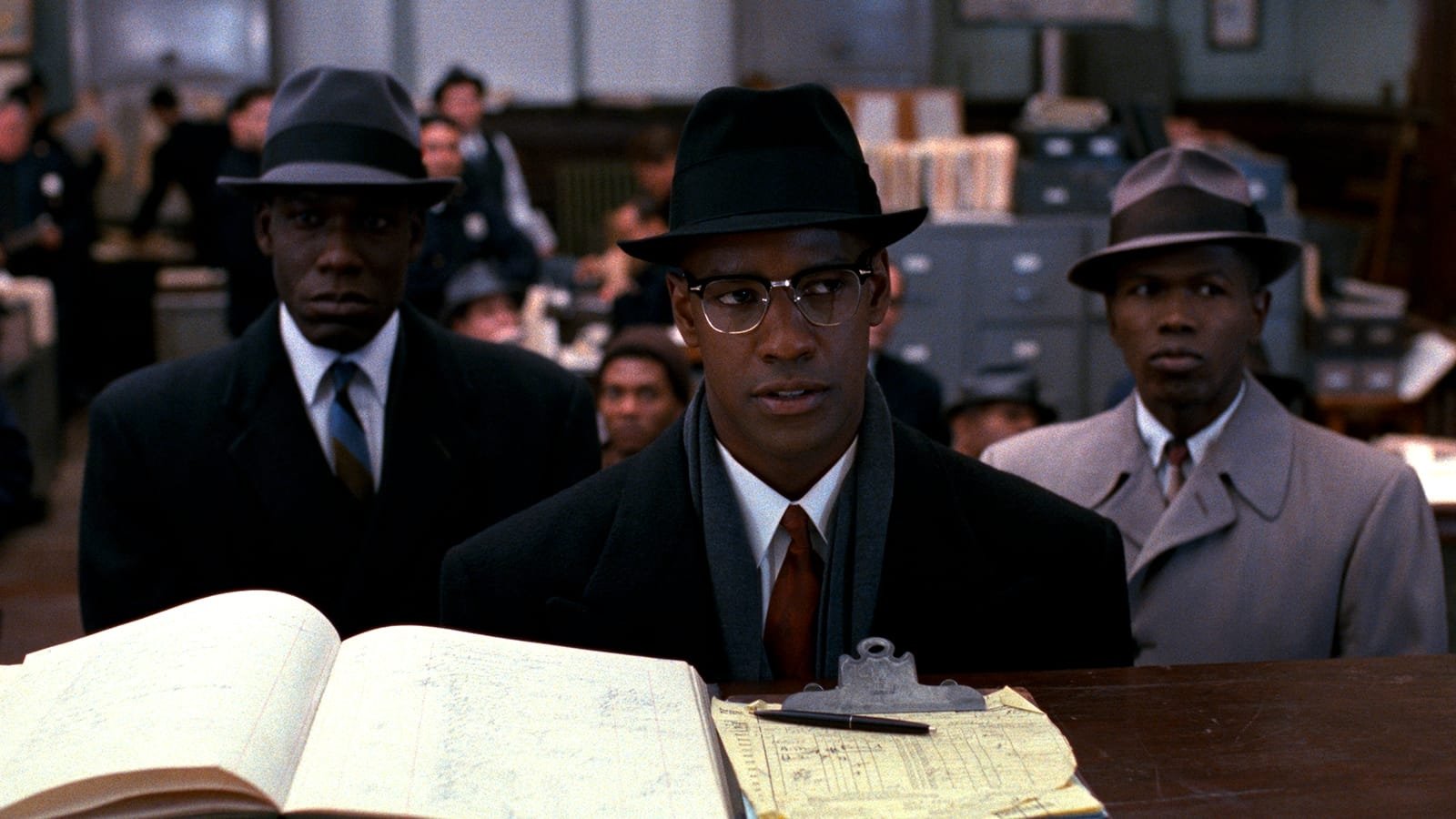
Cinema in America has been a huge cultural expression. The movie industry is not just based in the northern district of Hollywood, Los Angeles, California. Movie culture in the 21st century has been decentralized in many other cities from Atlanta, New York City, D.C., Chicago, Austin, Miami, etc. with independent projects, film festivals, and other programs to present cinema. The old school Hollywood cinema era was from 1913 to 1969. Also, early black American movie directors existed like Oscar Micheaux who funded and directed groundbreaking movies about race, economics, family, and other aspects of human existence. Frenchmen Auguste and Lousi Lumiere were involved in the birth of modern cinema. We know about movies like Orson Welles' Citizen Kane in 1941, Malcolm X in 1992, the Godfather in 1972, and Avatar in 2009. Today, since COVID-19 and the decline of theater attendance, we have more independent films in internet channels and other digital spaces that allow more actors and actresses to have access in means to express their talents to the world. Broadcasting is power in America has household ownership of television device in America is about 96.7 percent. The majority of all households in America have more than one set. There are media, channels, and ways where people can get information or just be entertained. People know and watch news from channels like ABC, NBC, CBS, FOX, Newsnation, MS NOW, and other corporate channels. Today, podcasts, digital news channels, and other grassroots media services are very commonplace in our generation. There has been a high level of critically acclaimed television series in recent years. Americans also celebrate many holidays based on American history, Christian and other religions' traditions, and national celebrations like New Year's Day, the Dr. King holiday, President's Day, Memorial Day, Veteran's Day, Juneteenth (to celebrate freedom of black people from the evil of slavery), Independence Day, Labor Day, Thanksgiving, and Christmas.

Fashion has always been part of the motif of the United States' tradition. Creativity is always part of American fashion styles. The blue jeans were popularized by the merchant Levi Strauss, a German Jewish immigrant in San Francisco. American teenagers and adults wear jeans today. They are worn by people of every age, social class, and race. They remain an American staple, and I wear jeans all of the time. Modern American fashion has been hybrid system from European, Asian, African, and other influences. Back in the colonial days, many colonists wore colonial clothes. As time went on, American fashion has been eclectic and influenced by sportswear too involving shirts, shoes, bras, sweaters, jersey, and other items. Athleisure is very commonplace because it can be comfortable, stylish, and functional. There has been more formal wear with conservative dresses, hats, pants, suits with ties, and other clothes. Designers like Ralph Lauren, Clavin Klein, Alexander Wang, Vera Wang, Marc Jacobs, Dapper Dan, Oscar de La Renta, Donna Karan, Diane von Furtsenberg, and other people like made brands popular form Abercombie and Fitch, Ecko, etc. Jacqueline Kennedy Onassis is famous for being a fashion style icon. The annual Met Gala ceremony in Manhattan, NYC has been a world prestigious fashion event that shows experimentation, unique fashion trends, and a lively atmosphere where celebrities and unsung people enjoy themselves. Fashion staples are found in Los Angles, New York City, Las Vegas, Seattle, Portland, Atlanta, Chicago, Philadelphia, San Francisco, Dallas, Nashville, etc. The late Virgil Abloh and Pharrell Williams have innovated fashion too. The family structure in America in complicated. Contemporary American society has changed. The old school nuclear family (or a man and woman united in marriage with one or more biological children) has been in America back then and today. Yet, there are mixed families, single families, and other different types of family structures. There are single people too. Back in 1970, the nuclear family was 40.3 percent of Americans and in 2000, that percent is 24.1 percent. Single people rose from 5.2 percent to 9.9 percent. Between 40 and 60 percent of new marriages will eventually end in divorce. There has been a wide variety of housing prices too. Many upper middle-class people have moved into the suburbs. Some previous middle class neighborhoods have become upper middle class neighborhoods. Americans embrace volunteerism and philanthropy heavily. Involving drugs and alcohol, by the 19th century, alcohol was readily consumed with little to no laws in regulating them. Today, most Americans don't agree with banning alcohol outright but embrace legitimate regulations like banning children from drinking hardcore alcohol and dangerous drugs. There are debates on the regulation of drugs to this very day. There are many cultural institutions in America like the National Gallery of Art, the Smithsonian National Museum of African American History and Culture, the National Endowment of the Arts, and other historic places like The Grand Canyon, etc.

Much of the literature of America has been influenced by Enlightenment philosophers like John Locke including the political writings of Benjamin Franklin, Alexander Hamilton, Thomas Paine, and Thomas Jefferson. Also, American literature is diverse filled with authors who are black Americans, Latino Americans, Native Americans, and people of diverse backgrounds and cultures. We know of the late icon Toni Morrison who wrote about family, community, the black experience, and lessons about life in general. Mark Twain didn't just write stories about satire. He shown complex stories about American life back over a century ago in an honest, cogent fashion. Herman Melville and Ernest Hemingway has shown works about many subjects. Fiction and non-fictions have been shown by Harper Lee, J.D. Salinger, and F. Scott Fitzgerald. From Edgar Allan Poe and Harriet Becher Stowe of the past and Donald Bogle, Ta-Naehisi Coates, Colson Whitehead, Jasmy Ward, and Roxane Gay of the present, American literature can be kind, provocative, and make us think about the philosophies of life.

A lot of people are confused about the concepts of race, ethnicity, and nationality. Back many years ago, we were taught about such things in sociology class or geography class. The term of race is a social construct that categorizes people by physical traits (like skin color, hair texture, face features, other types of phenotypes, etc.). In the United States of America by 2020, we have 12.4 percent black people, 61.6 percent white people, 6 percent Asian people, 1.1 percent Native Americans, 0.2 percent Pacific Islanders, 18.7 person Hispanic or Latinos. 10.2 percent of Americans are biracial or multiracial, and 8.4 percent are other races in America. The term of ethnicity is about a shared cultural heritage (like language, ancestry, etc.). That refers to a shared cultural heritage dealing with language, religion, traditions, and ancestry along with shared cultural experiences. The term of nationality is a legally assigned designation (either by birth or by naturalization) that you belong to a nation state being total citizenship. In America, we have a long history of a complex relationship among race, ethnicity, and nationality. In fact, my black ancestors were deprived of basic citizenship rights when they helped to build up America along with other people. As for me, my race is Black, my ethnicity is African American or Black American, and my nationality is American. Race is often imposed by society, ethnicity is often self-identified, and nationality is bestowed by a government. Race, Ethnicity, and Nationality are very diverse concepts. America has the most diverse cultural traditions in human history. For example, the Apollo in Harlem highlights some of the greatest African American cultural excellence in the world, we know about great black American STEM scholars, there is Chinese American contributions in America, we know of the historic contributions of other people (from the Irish Americans, Native Americans, Jewish Americans, Italian Americans, Latino Americans, Arabic Americans, and other people). We should treat all people with dignity and respect, regardless of one's background. That is part of the Golden Rule which I believe in wholeheartedly. One final point is to be made. All humans came from Africa, so I will always honor my black African heritage period.
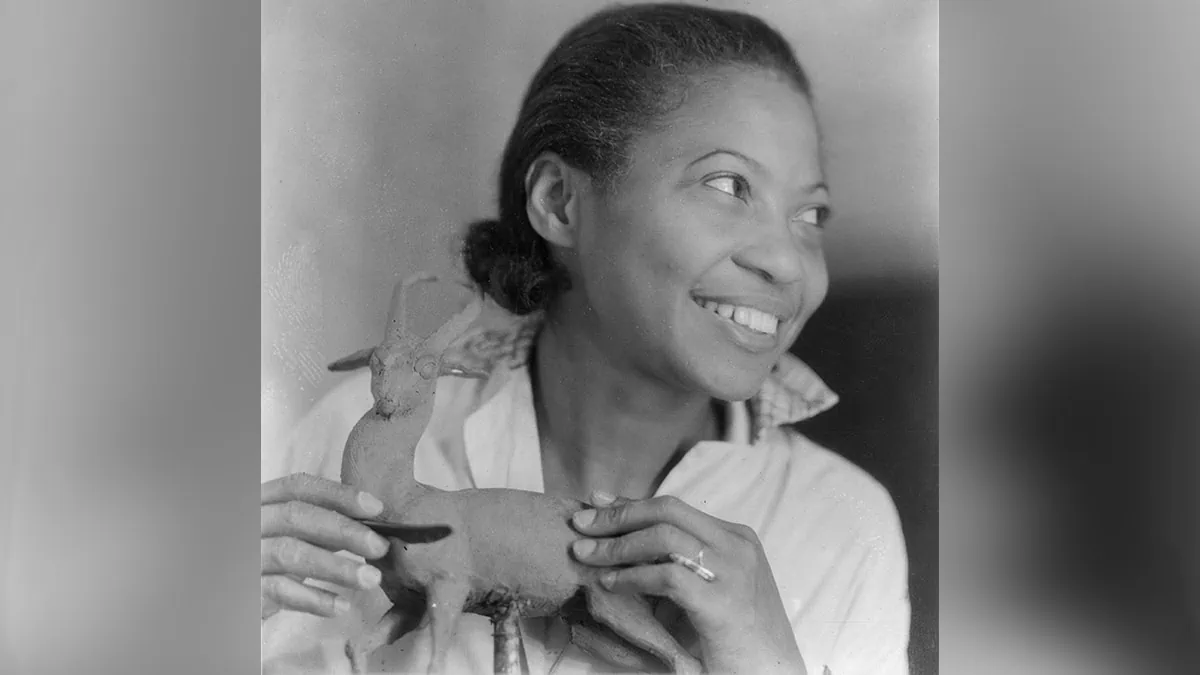
The first American art came from Native Americans. Native Americans did art in many different ways from calligraphy, sculptures, and other large sculptures. There was a great cultural overlap between the Siberian Yupiit, who have great cultural overlap with the Native Alaskan Yupiit people. There were Native Americans using paintings, basketry, textiles, and architecture in the form of American art. Many Native Americans have a carved profile of walking mammoth or mastodon images dating back to 11,000 B.C. There was the painted object from 8.050 B.C. Researchers found a petroglyph of a caravan of bighorn sheep near Moab, Utah in America. Facemasks, sculptures of falcons, and clay cooking utensils were used by the indigenous peoples of the Americas for a long time. Cooper plates, Rogan plates, and other images were found in the Mississippian culture spanning from 800 to 1500 A.D. Beads and baskets where diverse designs were found in early American art made by Native Americans.
Later, many early Americans di portraits of people, other paintings, and other images of art. There were the Romantic school of art and the Baroque style. By the 18th century, famous artists existed like Joseph Badger, John Brewster Jr., and Robert Feke. Jeremiah Theus and John Singleton Copley made images too. By the 19th century, more historical paintings and abstract paintings existed. Also, we have the famous sculptor Edmonia Lewis, who was an African American (with Native American heritage) made tons of work involving the late neoclassicalism type. She made works that deals with African Americans and Native Americans. There were tons of black artists like Henry Ossaaw Tanner and Robert Seldon Duncanson. Joshua Johnson was a great black American portrait painter who was active in Baltimore. He lived from ca. 1763 to ca. 1824. By the 20th century, American artists were used by Jacob Lawrence, Alma Thomas, Romare Bearden, Augusta Savage, Aaron Douglas, Sam Gilliam, Lois Mailou Jones, Charles White, and others who did abstract, regular paintings, sculpture, and other works. After the Harlem Renaissance, the 21st century artists include Mark Bradford, Kara Walker, Theaster Gates, Amy Sherald, Nick Cave, Kehinde Wiley, Jordan Casteel, etc. 21st century artists use cross hybrid works, joy, resilience, resistance, other conventional plus non-conventional works.

Honoring American Heroes
Since we are close to the 250th anniversary of the existence of the United States of America, I wanted to show stories about these many prominent, courageous Americans who changed America and the world for the better. It is certainly our responsibility to help our neighbors during these controversial times that we live in. That precisely means to stand up for voting rights, defend the protection of the environment, celebrate our cultural diversity, desire racial justice, love Blackness, and seek a much better world than the past and present. These stories are our history and the long history of the American story indeed.
.jpg)
1. Ella Baker was a civil rights activist and revolutionary who was one of the Mothers of the Modern-Day Civil Rights Movement (along with Septima Clark). She was born in Norfolk, Virginia (in the 757), lived in North Carolina, and worked for racial justice in New York City. She was the founder of SNCC (the Southern Nonviolent Coordinating Committee) in Raleigh, North Carolina (at the HBCU of Shaw University). She wanted grassroots, democratic organizing from the bottom up to gain human liberation. SNCC (which followed Ella Baker's philosophy of democratic grassroots activism) would promote both nonviolence and self-defense in order for people to get legitimate social change. Ella Baker supported black freedom, prison justice, Puerto Rican independence, women's rights, and anti-Vietnam War activism. She was an equal politically and intellectually to Dr. King and Malcolm X.

2. Fannie Lou Hamer was born in the Deep South in Mississippi. She was a sharecropper who was a victim of racism, sexism, and police brutality. Yet, she persisted to be one of the greatest black freedom fighters in history. Malcolm X praised her heroism. She fought to promote the end of Jim Crow apartheid with words and deeds. She advanced cooperatives to advance economic justice, she fought for more women to go into Congress, and she opposed the Vietnam War in a forthright fashion. In 1964, Hamer stood up to oppose a pro-segregationist group of Mississippi Democrats at the 1964 Democratic National Convention in Atlantic City, New Jersey. Fannie Lou Hamer said if this is America when black people are afraid of their lives from racists trying to harm us. The whole nation heard her voice on that day. Ironically, in 2026, far right Republicans are executing actions to try to cut black representation in Congressional districts via nefarious gerrymandering policies in Alabama, Florida, Louisiana, etc. Fannie Lou Hamer was compassionate black woman who loved true and justice. Fannie Lou Hamer lived and passed away in 1977.

3. John Brown was a unique white man in antebellum America who was not only an abolitionist. He was willing to use arms in trying to free black slaves. Slavery is tyranny and fascism personified. People have every God given right to use self-defense in freeing black people from bondage. John Brown fought pro-slavery forces in Kansas. He was many things to many people. Yet, no one can diminish his brave personality in standing up for justice for black people. John Brown and other black men organized the Harper Ferry's Raid (which took place in Virginia) to liberate black people in America from slavery. It failed, some men escaped, some were killed by the U.S. government during the raid, and some were hanged by the U.S. government after the raid ended. John Brown was captured, sent to trial, and convicted unjustly in my view. John Brown was hanged by the U.S. authorities and was a lifelong fighter against slavery.
.jpeg)
4. Dr. Martin Luther King Jr. was an iconic orator, civil rights leader, and revolutionary. Dr. King was a Southern Baptist clergyman who was born and raised in the Southern city of Atlanta, Georgia. His parents were the preacher Dr. King Sr. and Alberta King. Dr. King preached nonviolence had anti-Vietnam War views, promoted civil rights, advanced voting rights, and believed in economic justice unapologetically. Dr. King went to Morehouse College when he was 15 years old. He studied theology, philosophy, and sociology during his duration of being in multiple colleges. He was an outstanding orator who stirred up the souls of men, women, and children to stand up and speak up for justice. Dr. King organized campaigns to help pass both the Civil Rights Act of 1964 and the Voting Rights Act of 1965. Dr. King by the late 1960s became more revolutionary to praise democratic socialism, desire reparations for African Americans, praise W.E.B. DuBois in a rare 1968 speech, wanted a Poor People's Campaign (uniting people of all colors in America to try to eradicate poverty in American society), and boycott the 1968 Summer Olympics (over society's treatment of black Americans). Dr. King fought for sanitation workers (in giving them the right to union, living wages, and economic justice in general) just before his passing in Memphis, Tennessee on April 4, 1968. The things that he got right inspire us to this day. Dr. King was right to say that a threat to justice anywhere is a threat to justice everywhere, so we have to be vigilant to stand up for righteousness in our generation.

5. Malcom X was more than a revolutionary, black scholar, orator, and a lover of justice. He was a living example of black manhood as accurately described by the late Ossie Davis in his eulogy of Malcolm X. He was born in the Midwest in Omaha, Nebraska to Garveyite parents. That is part of what inspired Malcolm X to be a strong Pan-Africanist leader. Malcolm X's life was filled with massive transformative ideological and personal evolution from being a hustler, a primp, and a drug abuser to being one of the greatest black freedom fighters in human history. Malcolm X was a like a black prosecutor indicting American society of its crimes against black Americans like slavery, rape, lynchings, discrimination, theft of lands, and other forms of mental oppression. Malcolm X was in the Nation of Islam, left in 1964, and was in the MMI (or Muslim Mosque Incorporated). He worked with black men and black women to form the OAAU (or the Organization of Afro-American Unity) to advocate for true black liberation. He had no naivete of society, and he was assassinated by February 1965. Yet, his views (of opposing the Vietnam War, promoting self-defense, and believing in black unity including black self-determination), heroism, and activism inspire us now in 2026.

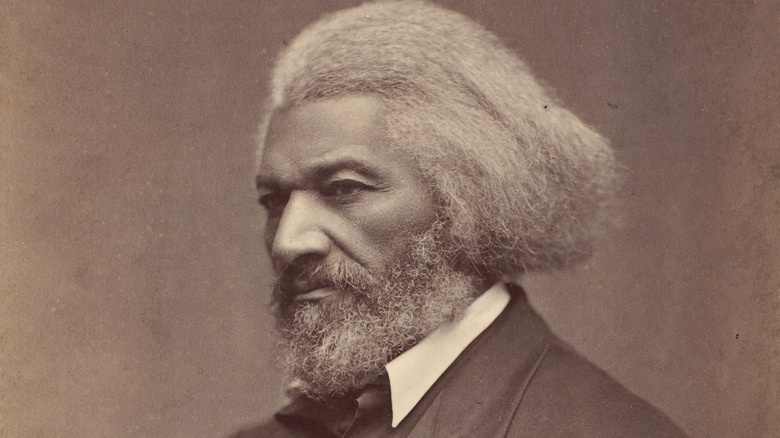
6. Frederick Douglas lived in Maryland, and he freed himself from slavery. He was a renaissance man who wrote books, opposed slavery as a dedicated abolitionist, and supported the black American Union forces to defeat the Confederate enemy. Frederick Douglas, after the American Civil War, supported the suffrage movement (or voting rights for all women), human rights of black people, and he was a diplomat. He loved all of his children, and Frederick Douglas's descendants are related to my ancestors' in laws in real life. Therefore, the story of Frederick Douglas is very personal to me.

7. Harriet Tubman was born in the Eastern Shore of Maryland. She was born a slave and escaped slavery too. She freed many other black slaves to experience freedom in the Underground Railroad (or a network of abolitionists and anti-slavery activists who freed black slaves constantly. Many freed black slaves escaped into the North, parts of the Midwest, and Canada too). Harriet Tubman supported black freedom, the suffrage movement (or to give women the right to vote), and helping the elderly in New York state. She also was the first black woman who rallied a United States Union Army force against the Confederate enemy via the Combahee Raid (on June 1-2, 1863) in South Carolina. Col. James Mongtomery led the raid too. This raid (which included 150 African American soldiers from the 2nd South Carolina Volunteer Infrantry and troops from the 3rd Rhode Island Artillery) liberated about 756 enslaved black human beings. Harriet Tubman was a key strategist and intelligence gatherer for the raid to guide Union gunboats. Harriet Tubman was indeed a hero who remains part of the greatest of Black Excellence.
:max_bytes(150000):strip_icc():focal(711x126:713x128)/martin-luther-king-jr-granddaughter-yolanda-renee-king-father-martin-luther-king-III-011525-6568f9b063c4481ab66940c833cc9503.jpg)
:max_bytes(150000):strip_icc():focal(762x213:764x215)/martin-luther-king-jr-granddaughter-yolanda-renee-king-national-mall-011525-2b9ae52f128342eb8b749711a181dac7.jpg)
8. Yolanda Renee King proves that heroes are not just found in older people or people who have passed away. They exist among people of every background and every generation too. Yolanda Renee King is a younger person who wants social justice and legitimate gun control measures to save human lives. Yolanda is the daughter of Martin Luther King III and Arndrea Waters King. She is also the granddaughter of the late Dr. Martin Luther King Jr. and Coretta Scott King. Yolanda spoke in favor of voting rights and opposes systematic inequality. She spoke at the March for Our Lives and at other rallies. She has an illustrated book to describe profoundly important life lessons. She is a living legend of the black freedom struggle like her parents, her grandparents, and many of her relatives.
The Challenges of America
For those of us who lived on this Earth for more than 40 years, we have a unique perspective of America. We have seen the storm or the rain the blessings of this nation too. There are many challenges in America as we all realize. There is massive economic inequality with some large corporations having governmental-like authorities that pollute our environment, discriminate (against black people, brown people, women, disabled people, and other human beings), and go out to receive record tax breaks from an authoritarian regime headed by Trump. Trump has been allowed by the Supreme Court to have near immunity. We still have institutional racism impacting the black community and other communities of color in dealing with health, education, economics, and other issues. We have serious problems with sexism (which is promoted heavily by the manosphere and other red pill extremists), xenophobia, and other prejudices that exist in American society. Still, America has not reached into true equality for all people. Equality doesn't mean that everyone is genetically identical. Even twins are not genetically identical. Equality precisely means that all people have equal worth, equal dignity, equal value, and have the God-given unalienable rights (of the right to life, liberty, and the pursuit of happiness) that should be never taken away. Equality means that all human beings should be treated with the same respect and dignity plus given excellent opportunities to achieve their own happiness or a successful life. I still have hope for America. As an older Millennial who has lived on this Earth for almost a half of a century, I hope. The reason is because of the working class and other people building this nation up, of the black activists defending black human rights, of the people opposing ICE's excessive behavior against immigrants, the people defending our voting rights (against the SAVE Act and other voter suppression policies), etc. I have great hope for the unsung heroes saving lives, growing charities, developing food drives, and protesting constantly for our sacrosanct democratic rights.


The Flora and Fauna of America
The United States has a very diverse fauna from Virginia to Hawaii. There are many animal species in America that are found nowhere else on Earth, except in America. Most of the North American continent is found in the Neartic, Neotropic, and Oceanic faunistic realms. Probably the most famous fauna in America is the national bird of the bald eagle. I remember seeing a rare bald eagle in a parking lot last year. The bald eagle is a legally protected species and is found all over America, even in Alaska. An estimated 432 mammal species comprise the fauna of the continental U.S. There are more than 800 species of bird and more than 100,000 known species of insect. There are 311 known reptiles, 295 amphibians and 1154 known fish species in the U.S. Known animals that exist in all of the lower 48 states include white-tailed deer, bobcat, raccoon, muskrat, striped skunk, barn owl, American mink, American beaver, North American river otter and red fox. The red-tailed hawk is one of the most widely distributed hawks not only in the U.S., but in the Americas. Huge parts of the country with the most distinctive indigenous wildlife are protected as national parks. In 2013, the U.S. had more than 6770 national parks or protected areas, all together more than 1,006,619 sq. miles (2,607,131 km2). The first national park was Yellowstone National Park in the state of Wyoming, established in 1872. Yellowstone National Park is widely considered to be the finest megafauna wildlife habitat in the U.S. There are 67 species of mammals in the park, including the gray wolf, the threatened lynx, and the grizzly bear. Western parts of America have mountain lions, raccoons, white tailed antelope squirrels, badgers, coyotes, hawks, and other species of lizards. There are the black and brown bears plus grizzly bears in the northwest and Alaksa. In the Southern part of America we have crocidiles, alligators, turtles, snakes, bullfrogs, and the American black bear. In Central America, we have coyostes, muskrats, American bison, snaks, lizards, and salamanders. The pronghorn is the fastest land mammal in the Western Hemisphere that can run up to 55 mph. The groundhog is widespread throughout Illinois, Iowa, Missouri, and Minnesota. Virginia opossum is found in states such as Missouri, Indiana, Iowa, Oklahoma, Nebraska and Kansas. In the Eastern United States, we have animals like deer, rabbits, rodents, squirrels, hares, woodpeckers, owls, foxes and bears. The New England region is particularly famous for its crab and the American lobster living along most of the Atlantic Coast. The bobcat, raccoon and striped skunk live in every eastern state, while the American alligator lives in every coastal state between North Carolina and Texas. Some species of mammals found throughout the Eastern U.S. includes the red fox and gray fox, the North American beaver, North American porcupine, Virginia opossum, eastern mole, coyote, white-tailed deer, American mink, North American river otter, and long-tailed weasel. The American black bear lives throughout most of New England, New York, New Jersey, Pennsylvania, Maryland, the Virginias, and parts of the Carolinas and Florida. Whales and sharks were in the waters of America too. Famous birds in Hawaii are ʻiʻiwi, nukupuʻu, Kauaʻi ʻamakihi and ʻōʻū. Most of these birds are extinct. The hoary bat is found in the Kōkeʻe State Park on Kauaʻi, feral horses live in the Waipio Valley, feral cattle by the Mauna Kea, and the Australian brush-tailed rock-wallaby live by the Kalihi Valley on Oʻahu. The Hawaiian monk seal, feral goats, feral sheep, and feral pigs live throughout most of the archipelago. In Hawaii, three species of sea turtles are considered native: honu, honu'ea and the leatherback sea turtle. Two other species, the loggerhead sea turtle and the olive ridley sea turtle, are sometimes observed in Hawaiian waters. Fauna lives in all American territories too.
The native flora of the United States includes about 17,000 species of vascular plants, plus tens of thousands of additional species of other plants and plant-like organisms such as algae, lichens and other fungi, and mosses. About 3,800 additional non-native species of vascular plants are recorded as established outside of cultivation in the U.S., as well as a much smaller number of non-native non-vascular plants and plant relatives. The United States possesses one of the most diverse temperate floras in the world, comparable only to that of China. Several biogeographic factors contribute to the richness and diversity of the U.S. flora. While most of the United States has a temperate climate, Alaska has vast arctic areas, the southern part of Florida is tropical, as well as Hawaii (including high mountains), and the U.S. territories in the Caribbean and the Pacific, and alpine summits are present on many western mountains, as well as a few in the Northeast. The U.S. coastline borders three oceans: The Atlantic (and Gulf of Mexico), the Arctic, and the Pacific. Finally, the U.S. shares long borders with Canada and Mexico, and is relatively close to the Bahamas, Cuba and other Caribbean islands, and easternmost Asia. There are also rainforests as well as some of the driest deserts in the world. The native flora of the United States has provided the world with a large number of horticultural and agricultural plants, mostly ornamentals, such as flowering dogwood, redbud, mountain laurel, bald cypress, southern magnolia, and black locust, all now cultivated in temperate regions worldwide, but also various food plants such as blueberries, black raspberries, cranberries, maple syrup and sugar, and pecans, and Monterey pine and other timber trees. Some of the native U.S. plants, such as Franklinia alatamaha, have demonstrably become extinct or extinct in the wild; others, such as Micranthemum micranthemoides, have not been seen in decades, but may still be extant. Thousands of other native U.S. vascular plants are considered rare, threatened, or endangered, either globally (rangewide) or within particular states.

America to Me
As we conclude the chronicle of the 250 years of my nation of the United States of America, we all realize the miraculous birth and existence of America. America was born on July 4, 1776 (when the Declaration of Independence was signed by the Patriots), during the midst of the American Revolutionary War when the 10 colonies fought the imperialistic British Empire (that British Empire was filled with imperialism, slavery, racism, and capitalistic economic exploitation). The colonists (filled with the Sons of Liberty, farmer, soldiers, merchants, and human beings of every color) won the American Revolutionary war via guerilla warfare, help from other nations (like the Dutch, the French, the Spanish, etc.). From the Battles in the states of Massachusetts and New York to the Battle of Yorktown (in Virginia), America won the war filled with resiliency. Many Patriots supported the notorious evil of slavery and others didn't. Filled with both righteous people and wicked people, America's history has been filled with a profound paradox. That paradox is that while heroic Americans advanced legitimate social changes, cultural improvements, inventions, etc., America is also complicit in the sins of racism, slavery, the genocide of Native Americans, colonialism, xenophobia, sexism, etc. The U.S. Constitution caused America to function as a democratic Republic (that means that we don't have a direct democracy in every circumstance, but we do have a direct democracy in electing many House members, Senate members, referendums, etc.).

What do we do about this paradox? We have to do 2 main things. One is that we should never sugarcoat American history (as some far right zealots advocate), and other thing that we must do is to fight for justice in America during the present and future. Losing hope is not an option when we desire future generations to live in a world that is better than today. America to me is about the battle between good and evil, the resiliency of humanity, the glory of righteousness that has inspired the world. Never giving up is our percept, and real Americans accept that credo wholeheartedly. Recognizing the existence and importance of Native Americans is key in understanding America as well. They had their lands stolen by thieves and murderers just like my people (i.e. black Americans) were brutalized via slavery, racism, discrimination, lynchings, the peonage system, etc. Whitewashing American history is wrong, but we must also do the following. We must acknowledge the glory among the righteous aspects of America and continue to fight the evils in America to make America improve itself (along with people globally).
By Timothy